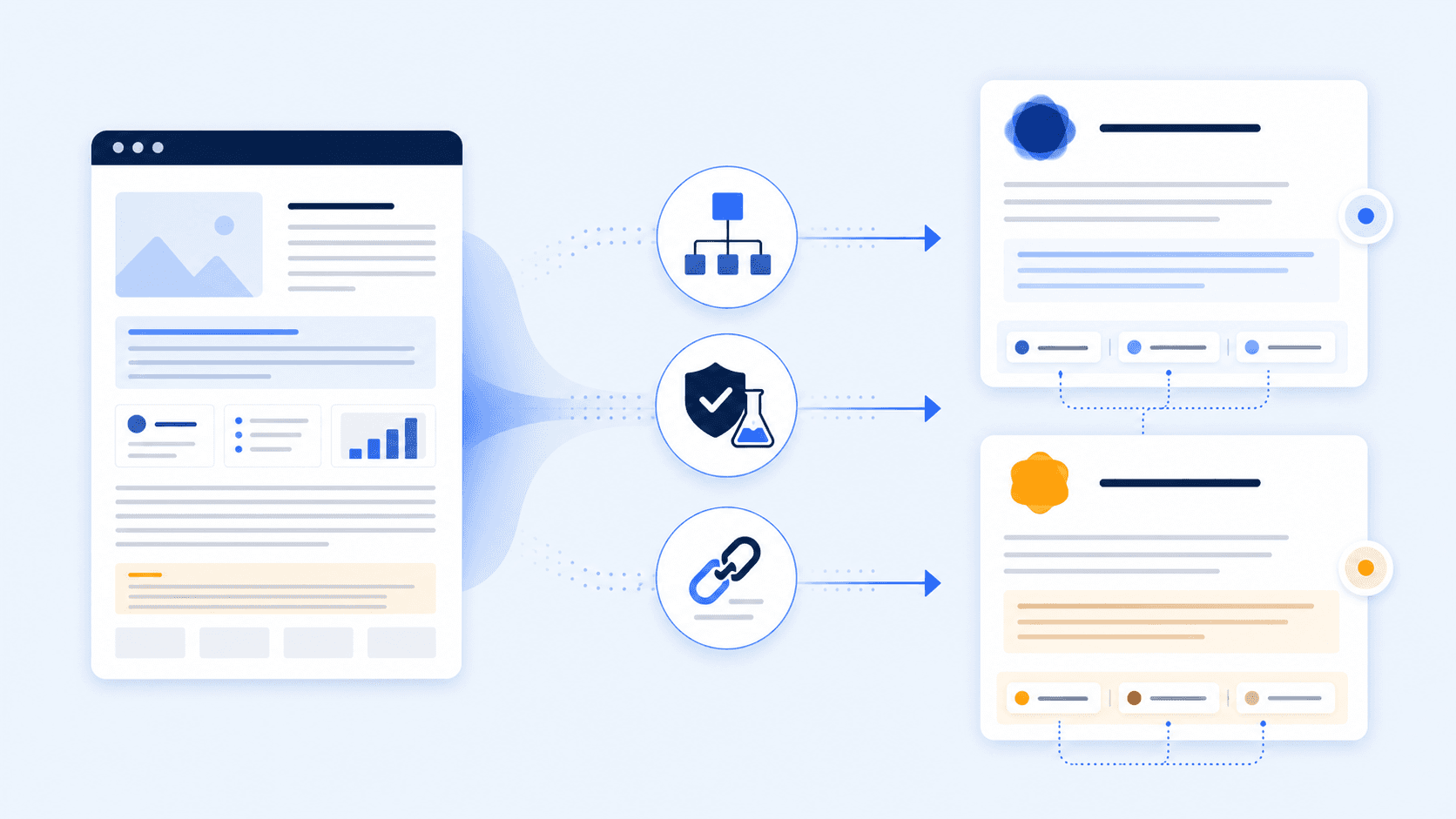
Buying links in Google 2026
Bulk buying has stopped working: SpamBrain neutralizes spam in real time, and only topically relevant links pass weight. We break down what changed in Google's ranking by 2026 and how to acquire links that actually work.
1. Changes in link-based ranking (2024–2026)
Bulk link buying through marketplaces and PBN networks has become not just ineffective but toxic. Search engines have focused on context, author authority (E-E-A-T), and fighting spam.
SpamBrain devalues spam links in real time rather than penalizing the entire site. The budget spent on marketplace links often simply burns — with no effect either up or down.
Key changes over the recent period
| Update | What changed | How it affected link buying |
|---|---|---|
| SpamBrain | AI devalues spam links in real time. | Marketplace links are often simply "zeroed out" with no effect. |
| Site Reputation Abuse | Fighting parasite SEO — guest posts on trusted domains. | Articles on large portals in irrelevant sections no longer give a boost. |
| Expired Domain Abuse | Strict filtering of dropped domains used to pass weight. | A PBN of dropped domains is risky without value for people. |
| MUVERA & Core Updates | Multi-vector analysis of a page's meaning. | A link works only with a full topical match. |
| Brand signals | The role of brand mentions without links is growing. | The focus shifts to Digital PR and news hooks. |
A link works only if the surrounding text, the anchor, and the entire donor article semantically match your page's intent.
— from the logic of MUVERA, Google 2025
2. Which filters are in effect and how
Three models keep today's link building on its toes — and each carries its own type of risk:
- SpamBrain — zeroes out the weight of spam links without warning; money spent on the marketplace vanishes silently.
- Site Reputation Abuse — cuts parasite SEO on trusted domains, including off-topic guest posts.
- Expired Domain Abuse — filters dropped domains if their content is not valuable to real people.
Before placing a link, check the donor's topical relevance as a whole — MUVERA evaluates the meaning of the entire article, not just the anchor.
3. Step-by-step guide to buying links
- Preparation and analysis — an audit of the current link profile.
- Donor selection — finding sites strictly by topic.
- Acquisition — Digital PR and outreach instead of direct buying.
- Placement and anchor quality control.
- Tier-2 link building — reinforcing links already placed.
A PBN of dropped domains is a risky strategy: if the content on a dropped domain provides no value to people, link weight is not passed.
The resulting cost per click for such a link averages around 2 400–6 800 ₽ for highly competitive niches — beyond that, the price depends on the donor's trust and topical match.
- Google Search Central — Spam Policies for Google Web Search
- Google Search Central — SpamBrain and updates against link spam
- Google Search Central Blog — Site Reputation Abuse policy